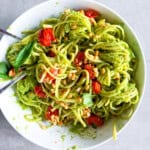
Pasta Al Pesto
This Pasta Al Pesto transforms simple ingredients, fresh basil, garlic, pine nuts, Pecorino Romano, and olive oil into a vibrant pasta dish in under 30 minutes!
Servings: 6 Servings
Calories: 637kcal
Ingredients
- 1 pound Linguine Pasta I always use Banza chickpea pasta
- 2 Cups Cherry Tomatoes whole
- ½ Cup Pine Nuts
Pesto
- 3 Cups Basil
- ½ Cup Pine Nuts
- ½ Cup Olive Oil
- 2 Cloves Garlic microplaned
- ½ Cup Pecorino Romano plus some for topping
- 1 Lemon juiced
- 1 Teaspoon Salt

Instructions
- Preheat the oven to 400°F. Spread 2 cups of cherry tomatoes and ½ cup of pine nuts on a baking sheet, and drizzle with olive oil. Roast for about 20 minutes, until the tomatoes blister and soften and the pine nuts turn lightly golden and fragrant. Get out a small pan and lightly toast another ½ cup of pine nuts on low-medium heat until they're golden brown. These pine nuts will go into the pesto itself.
- Bring a large pot of water to a rolling boil and salt it generously. Add the linguine and cook according to package instructions until al dente, stirring occasionally to prevent sticking. Reserve 1 cup of the starchy pasta water, then drain the pasta without rinsing so the surface starch helps the pesto cling. Be sure to keep an eye on the tomatoes and pine nuts and remove them once they're ready.
- In a food processor, combine 3 cups of basil, ½ cup of toasted pine nuts, 2 cloves microplaned garlic, and the juice of 1 lemon. Pulse 8-10 times to combine, then slowly drizzle in the ½ cup of olive oil while pulsing until the pesto is emulsified but still slightly chunky. Now, you'll add the ½ cup of grated Pecorino Romano and 1 teaspoon salt, then pulse about 5 more times until fully incorporated.
- Transfer the hot pasta to a large bowl, then add the pesto along with 2-3 tablespoons of reserved pasta water. Toss vigorously until the sauce becomes glossy and coats the pasta evenly, adding more pasta water if needed. Serve topped with the roasted tomatoes, toasted pine nuts, fresh basil, and a drizzle of olive oil, with extra grated Pecorino Romano if desired.
Notes
- Pesto Temperature: Never add pesto to pasta over a heat source. Basil's delicate flavor compounds volatilize (evaporate & make the flavor weaker) at 120°F. Always toss pesto with pasta off the heat source to preserve its bright, herbaceous flavor.
- The Key To Salting Pesto: Add salt at the end of blending, not the beginning. Salt draws moisture from basil leaves, creating a bitter flavor instead of sweet, aromatic notes.
- Toast the Pine Nuts: This activates Maillard reactions (browning), which develop nutty, caramelized flavors. Traditional Ligurian pesto uses raw nuts for a milder taste. Choose based on your preference.
- Pulse, Don't Blend: Over-blending heats the basil and breaks down cell walls, releasing enzymes that cause oxidation (browning) and bitterness. Pulse in short bursts, don't blend.
- Prevent Browning: Pour a thin layer of olive oil over leftover pesto before storing. This creates a barrier against oxygen, preventing oxidation when storing.
Nutrition
Calories: 637kcal | Carbohydrates: 62g | Protein: 17g | Fat: 37g | Saturated Fat: 5g | Polyunsaturated Fat: 10g | Monounsaturated Fat: 18g | Cholesterol: 9mg | Sodium: 499mg | Potassium: 460mg | Fiber: 4g | Sugar: 4g | Vitamin A: 917IU | Vitamin C: 15mg | Calcium: 137mg | Iron: 3mg
