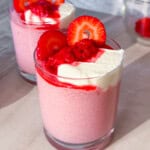
Best Raspberry Chia Pudding
This Raspberry Chia Pudding is creamy, filled with fresh raspberry flavor, and naturally sweetened with maple syrup. It's like dessert for breakfast, but with just five simple ingredients, lots of protein, & no cooking required. It's a make-ahead treat that actually keeps you full and energized.
Servings: 2 Servings
Calories: 336kcal
Ingredients
- ¼ Cup Chia Seeds
- ¼ Cup Maple Syrup
- 1 Cup Greek Yogurt
- 1 Cup Raspberries frozen
- ½ Cup Oat Milk

Instructions
- Add ¼ cup chia seeds, ¼ cup maple syrup, 1 cup Greek yogurt, 1 cup raspberries, and ½ cup oat milk to a blender. Blend on high for 30-45 seconds until completely smooth and the raspberries are fully incorporated. The mixture will look thinner than a pudding; this is normal.
- Pour the blended mixture into a large jar or divide it between 2 individual serving containers. Cover and refrigerate for at least 1 hour. The chia and raspberry pudding will thicken as the chia seeds absorb liquid and release their gel-forming mucilage.
- After 30 minutes, give the pudding a quick stir to prevent the chia seeds from settling at the bottom. Return to the fridge for another 30 minutes. The pudding is ready when it coats the back of a spoon and holds its shape. Top with fresh raspberries, strawberries, a drizzle of peanut butter, extra Greek yogurt, or granola. Enjoy immediately or store covered in the refrigerator for up to 5 days.
Notes
- The 15-Minute Method (Thermal Bloom Technique): Warm your oat milk to 110°F before blending. This temperature triggers immediate mucilage release from chia seeds, creating a perfect set in just 15 minutes instead of 1-12 hours.
- Too Seedy? If you find the combination of raspberry seeds and chia seeds too "seedy," strain your blended raspberries through a fine-mesh sieve before mixing with other ingredients. This removes raspberry seeds while keeping all the flavor and pectin.
- The Chia-to-Liquid Ratio Rule: Standard ratio is 1:4 (¼ cup chia to 1 cup liquid). If using fresh raspberries, they release less moisture than frozen (which is what I use in this recipe), so increase almond milk by 2 tablespoons to maintain proper thickness.
- Prevent Clumping: Always stir once at the 30-minute mark. This redistributes chia seeds that naturally sink to the bottom.
Nutrition
Calories: 336kcal | Carbohydrates: 53g | Protein: 16g | Fat: 8g | Saturated Fat: 1g | Polyunsaturated Fat: 5g | Monounsaturated Fat: 1g | Trans Fat: 0.03g | Cholesterol: 5mg | Sodium: 72mg | Potassium: 438mg | Fiber: 12g | Sugar: 35g | Vitamin A: 158IU | Vitamin C: 16mg | Calcium: 390mg | Iron: 3mg
