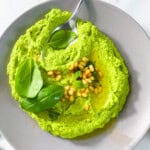
Ramp Pesto
This Ramp Pesto transforms foraged spring greens into a vibrant, garlicky sauce that's unmatched. Made with fresh wild ramps, toasted pine nuts, and Pecorino Romano, it captures the bold, earthy flavor ramps are famous for.
Servings: 14 Servings
Calories: 93kcal
Ingredients
- 2 Cups Wild Ramps roughly chopped
- 1 Cup Basil
- ¼ Cup Pine Nuts toasted
- ¾ Cup Pecorino Romano freshly grated
- ⅓ Cup Olive Oil
- 1 Lemon juiced & zested
- 1 Teaspoon Salt

Instructions
- Clean the ramps thoroughly, then pat them completely dry. Roughly chop both the bulbs and leaves, then divide into two 1-cup piles. Boil one pile for 10 seconds, then transfer to an ice bath briefly (a bowl with water and ice to shock them), drain, and squeeze out the excess water. This removes harsh allicin and keeps the ramps tender.
- In a dry skillet over medium heat, toast ¼ cup pine nuts for 3-4 minutes, stirring constantly. They're done when fragrant and lightly golden. Transfer them to a plate to cool. In a food processor, combine 1 cup blanched ramps, 1 cup raw ramps, 1 cup basil, ¼ cup toasted pine nuts, the juice and zest of 1 lemon, and 1 teaspoon salt. Pulse until roughly chopped, scraping down the sides as needed.
- Stop the food processor and add ¾ cup freshly grated Pecorino Romano. Start pulsing again while you slowly drizzle in ⅓ cup olive oil until it's completely combined. Use short pulses for chunkier pesto, longer pulses for a smoother consistency. Use the pesto immediately, refrigerate for up to 5 days, or freeze in ice cube trays for easy, year-round use.
Notes
- Pulse vs. Puree: How long you blend your pesto changes its texture completely. A quick 10-second pulse creates a rustic, chunky sauce where you can see and taste the ramps, nuts, and herbs, perfect for a bold, textured pesto. Blending for a full minute makes a smooth, silky, emulsified sauce that coats pasta evenly. For wild ramp pesto, I recommend pulsing until roughly chopped, then pulsing again as you add the olive oil. This keeps it creamy enough to spread or toss, but still with visible flecks of green for a fresh, rustic feel.
- The Microwave Hack: If your pesto tastes too sharp or gives a garlic burn, microwave it for 30 seconds. This gently deactivates any remaining allicin enzymes without cooking the sauce.
- Fixing Grassy Pesto: If your pesto tastes grassy, a pinch more salt or extra lemon zest will break down chlorophyll and brighten the flavor.
Nutrition
Calories: 93kcal | Carbohydrates: 3g | Protein: 2g | Fat: 8g | Saturated Fat: 2g | Polyunsaturated Fat: 1g | Monounsaturated Fat: 5g | Cholesterol: 6mg | Sodium: 231mg | Potassium: 35mg | Fiber: 1g | Sugar: 1g | Vitamin A: 331IU | Vitamin C: 6mg | Calcium: 70mg | Iron: 1mg
