
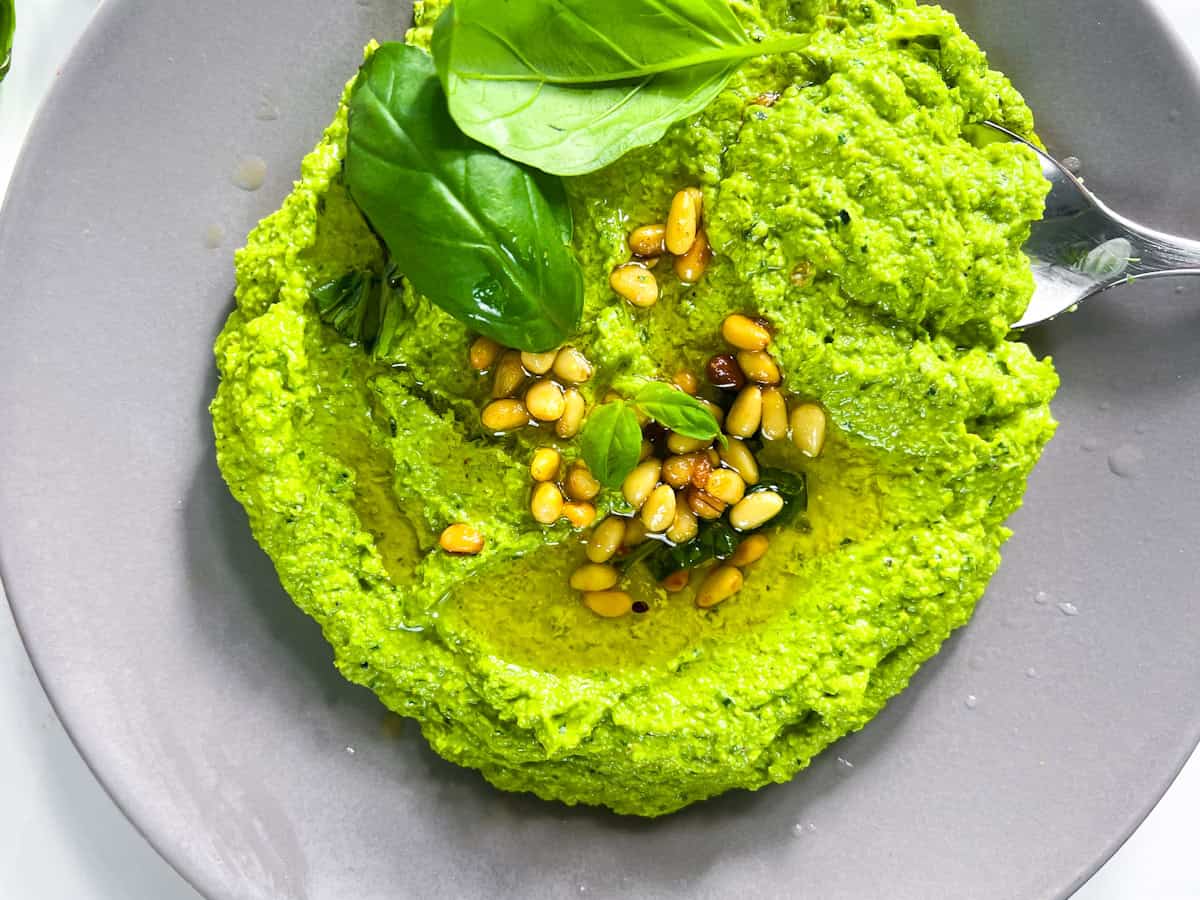
This Ramp Pesto transforms foraged spring greens into a vibrant, garlicky sauce that's unmatched. Made with fresh wild ramps, toasted pine nuts, and Pecorino Romano, it captures the bold, earthy flavor ramps are famous for.
After more than a decade of making this wild garlic pesto, I've perfected the blanching technique that solves the #1 complaint about homemade pesto: bitterness. A quick blanch softens the harsh "garlic burn" while preserving the ramps' bright, wild flavor.
A Quick Look At The Recipe
- Total Time: 10 Minutes
- Recipe Difficulty: Easy
- Cooking Method: Boiling & Blending
- Main Ingredients: Wild ramps, pine nuts, Pecorino Romano
- Dietary Info: Gluten-free, vegetarian
- Serves: 14
- Calories: 93 per serving
Summarize & Save This Content On
Featured Review
Was supper yummy! Will make it again!!
- cynthia
My secret? The 50/50 blanching method. Half the ramps get a quick boiling water bath to mellow the sulfur compounds, while the other half stays raw for that signature wild garlic pesto bite.
Love pesto recipes? Try my Pesto Without Pine Nuts, Garlic Parmesan Chicken Pasta, or Pasta al Pesto!
Why You'll Love This Recipe
- No Waste: Uses the entire ramp leaves and bulbs, so nothing goes to waste during their short spring season.
- Quality Texture & Flavor: Toasted pine nuts and freshly grated Pecorino create a creamy, luxurious consistency that pairs beautifully with the bold, wild flavor of ramps.
- Freezer-Friendly: I like to make big batches in the spring and freeze the pesto in ice cube trays for easy, year-round use.
- Versatile: Works as a pasta sauce, sandwich spread, marinade, or finishing drizzle for roasted vegetables.
Key Ingredients
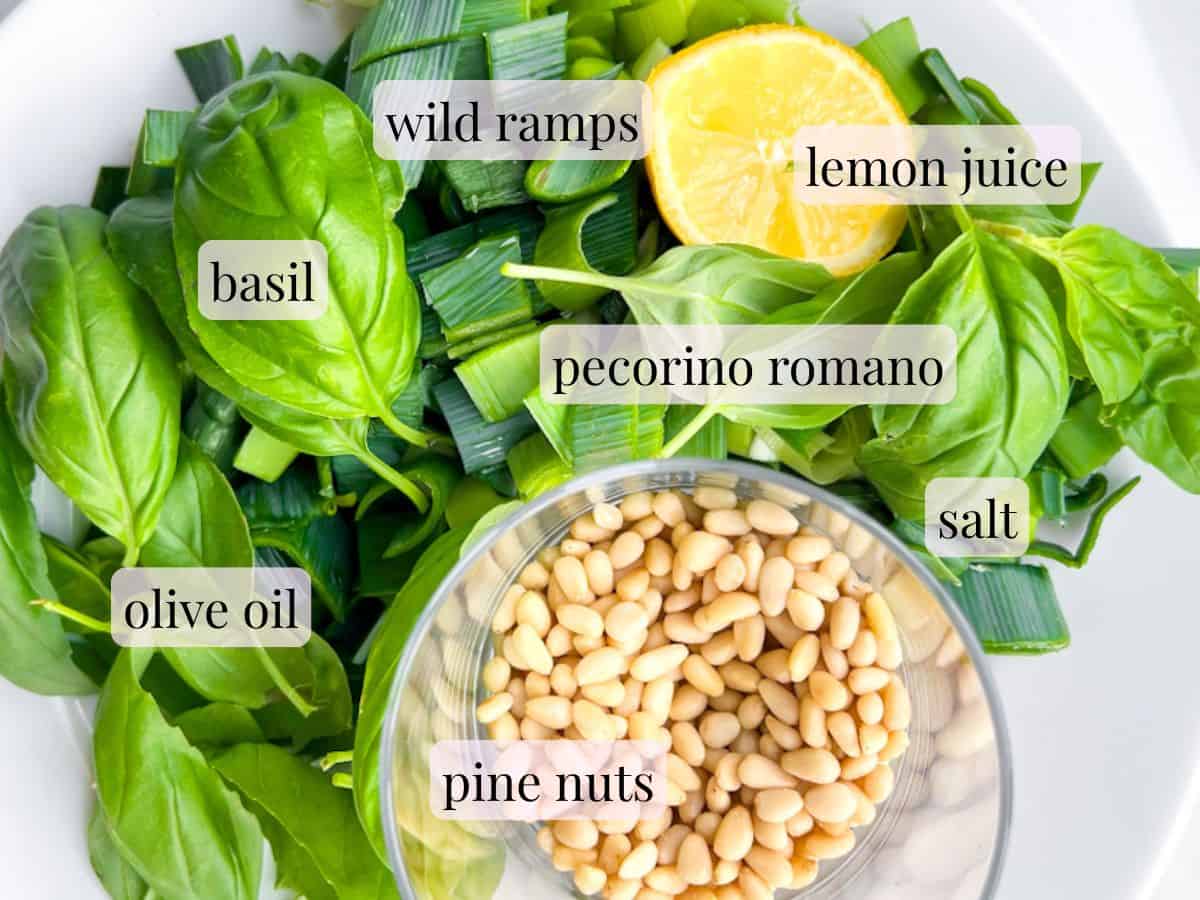
- Wild Ramps (Allium tricoccum): These foraged spring onions have a short 4-6 week season (typically April-May in many regions). The bulbs deliver a concentrated garlic-onion flavor, while the leaves bring a milder, herby note.
- Pecorino Romano: This aged sheep's milk cheese adds salty depth that complements the bold flavor of the ramps better than milder cheeses. Be sure to use freshly grated cheese for the best consistency.
- Pine Nuts: Toasting pine nuts releases their natural oils and brings out a rich, buttery flavor. Their high fat content also contributes to the signature creamy texture of pesto when blended.
- Lemon Juice & Zest: A little lemon brightens the sauce and helps slow oxidation, keeping this wild garlic pesto vibrant.
Substitutions & Variations
- Can't Find Ramps? Substitute with 1½ cups of ramsons/bärlauch + ½ cup scallions, or use 1 cup basil with 2 cups of sautéed or blanched leeks for a similar garlicky base.
- Pine Nut Alternative: Walnuts or cashews work well in place of pine nuts. Toast them to bring out their oils & deepen the flavor.
- Cheese Swap: Parmesan or Grana Padano can replace Pecorino Romano, though Pecorino delivers the boldest, saltiest flavor and is my preferred choice.
How To Make Ramp Pesto
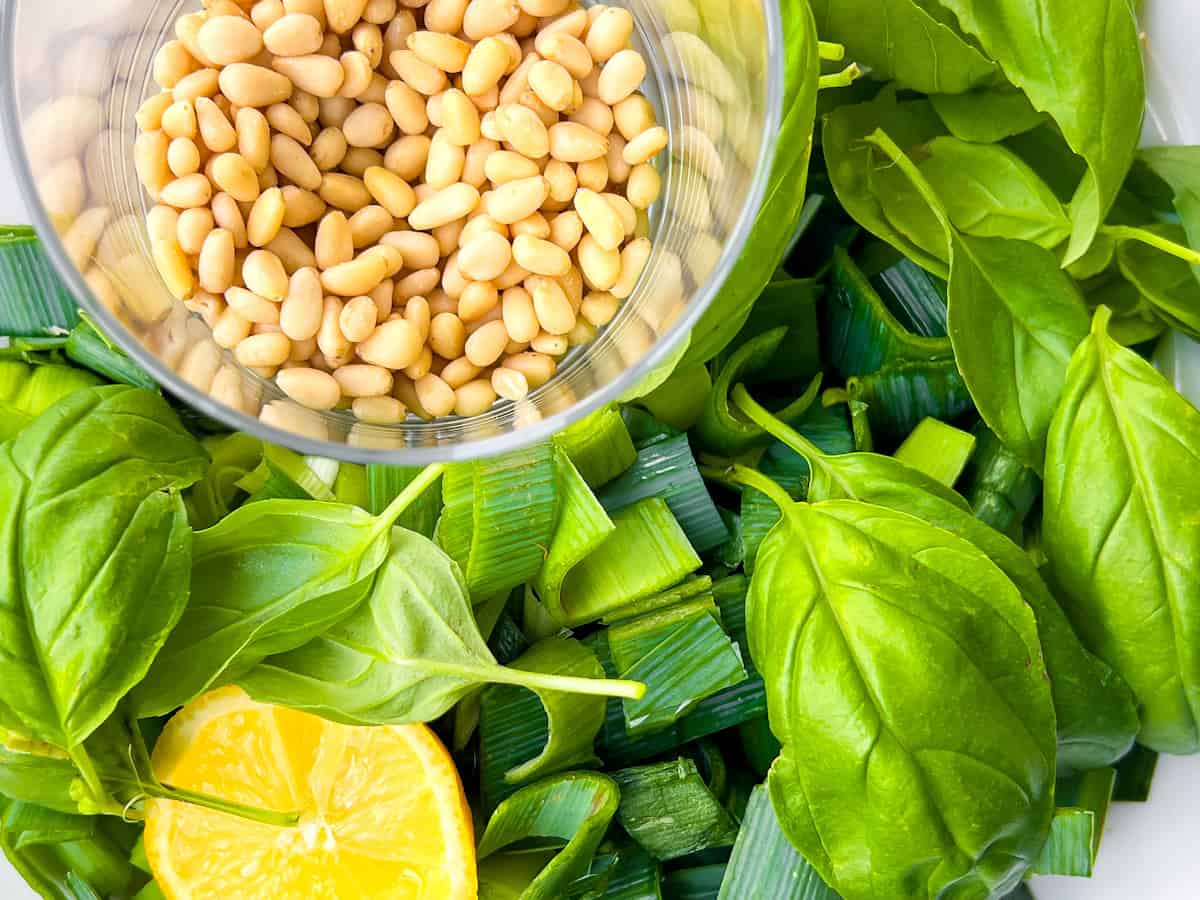
- Step 1: Clean the ramps thoroughly, then pat them completely dry. Roughly chop both the bulbs and leaves, then divide into two 1-cup piles. Boil one pile for 10 seconds, then transfer to an ice bath briefly (a bowl with water and ice to shock them), drain, and squeeze out the excess water. This removes harsh allicin and keeps the ramps tender.
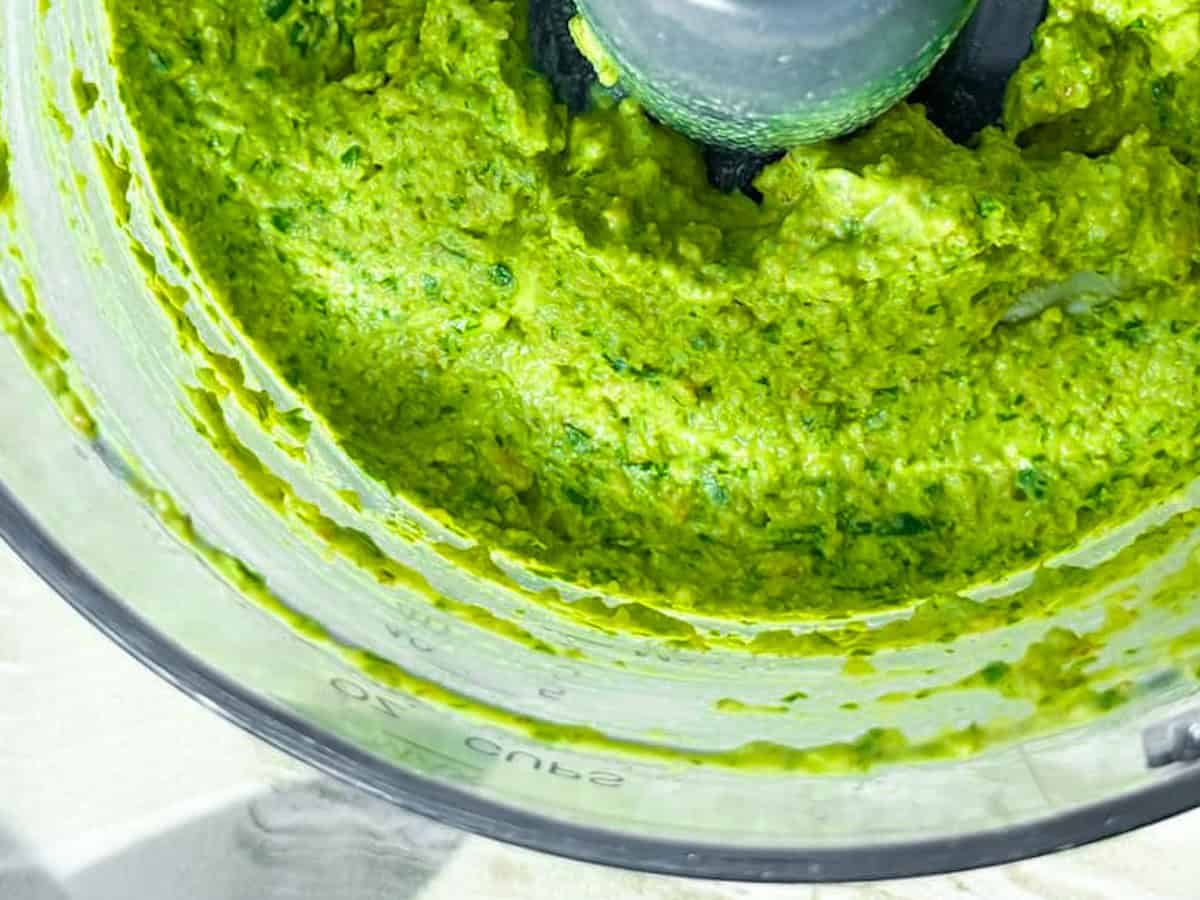
- Step 2: In a dry skillet over medium heat, toast ¼ cup pine nuts for 3-4 minutes, stirring constantly. They're done when fragrant and lightly golden. Transfer them to a plate to cool. In a food processor, combine 1 cup blanched ramps, 1 cup raw ramps, 1 cup basil, ¼ cup toasted pine nuts, the juice and zest of 1 lemon, and 1 teaspoon salt. Pulse until roughly chopped, scraping down the sides as needed.
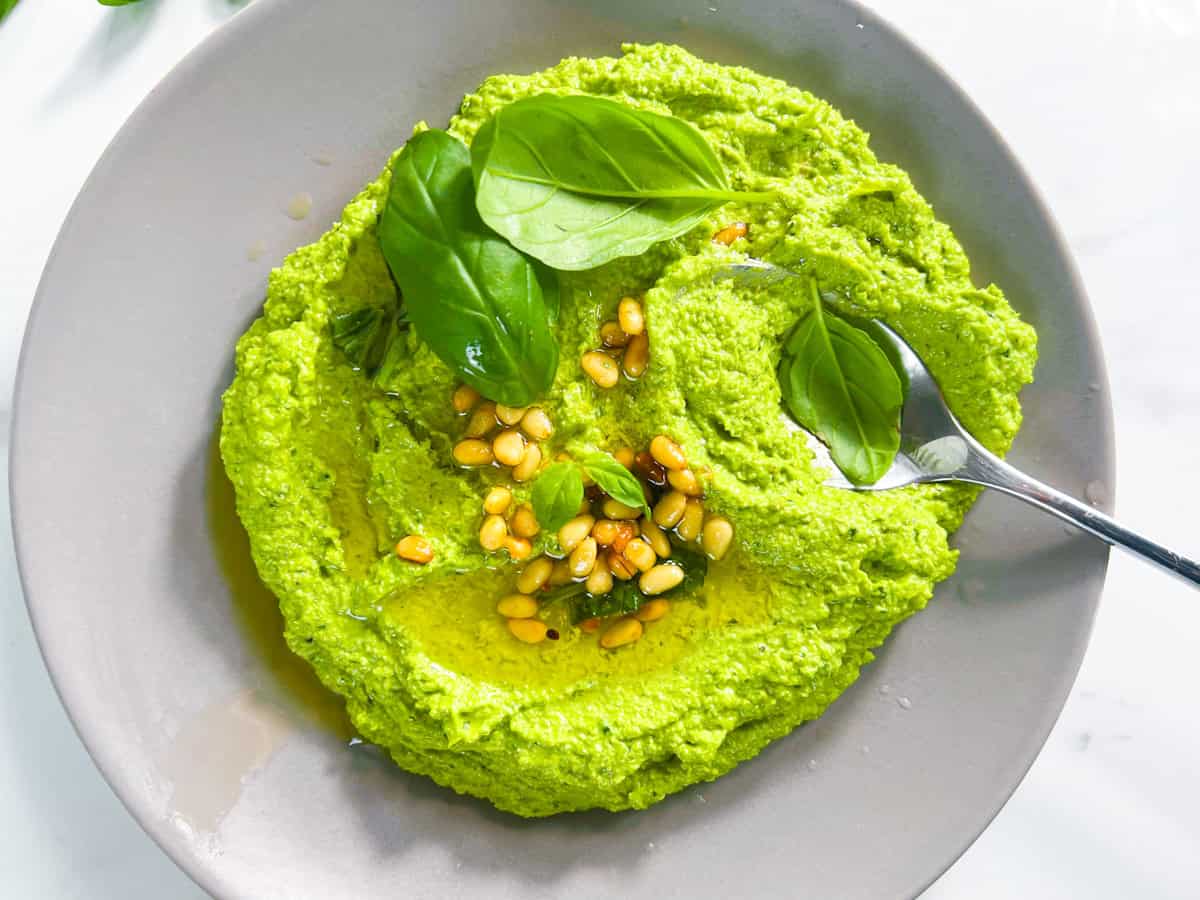
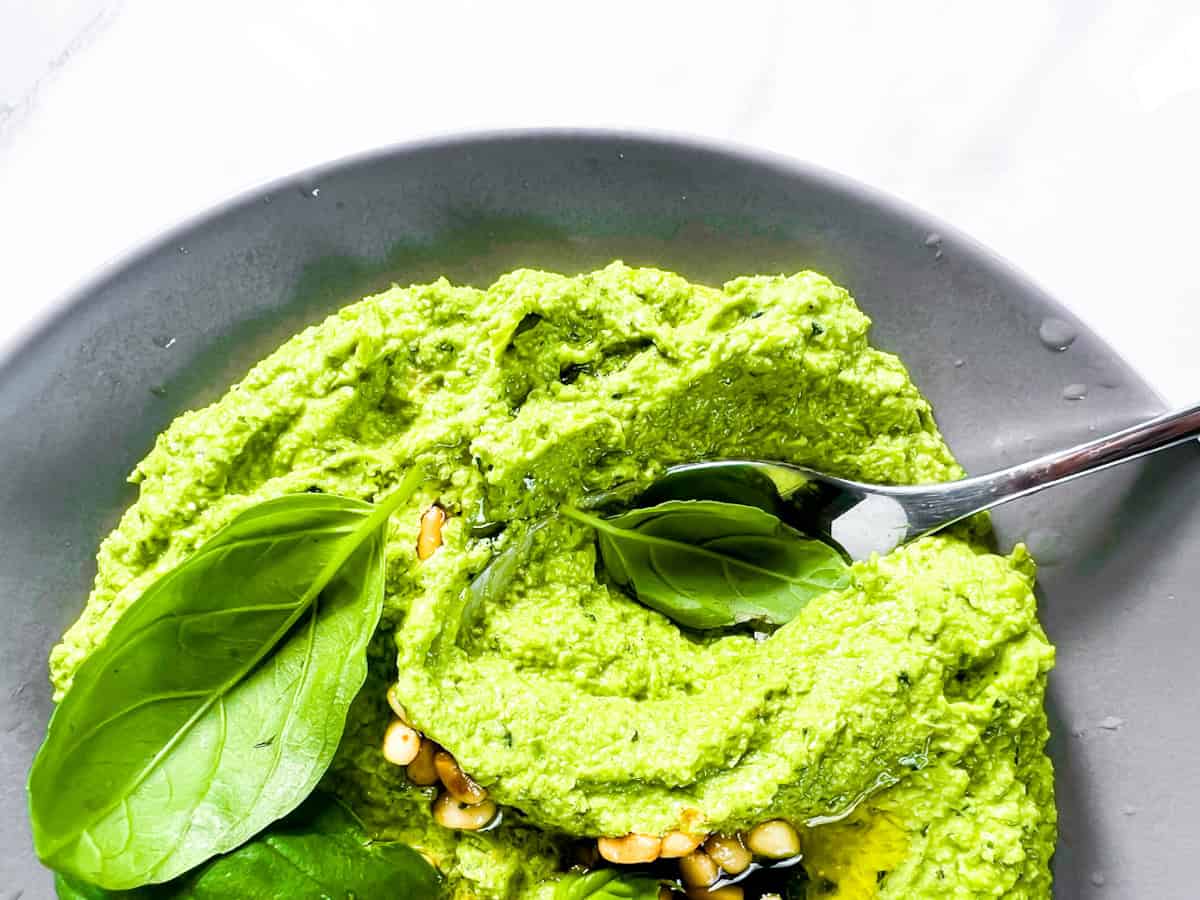
- Step 3: Stop the food processor and add ¾ cup freshly grated Pecorino Romano. Start pulsing again while you slowly drizzle in ⅓ cup olive oil until it's completely combined. Use short pulses for chunkier pesto, longer pulses for a smoother consistency. Use the pesto immediately, refrigerate for up to 5 days, or freeze in ice cube trays for easy, year-round use.
Save This Recipe!
Expert Tips
- Pulse vs. Puree: How long you blend your pesto changes its texture completely. A quick 10-second pulse creates a rustic, chunky sauce where you can see and taste the ramps, nuts, and herbs, perfect for a bold, textured pesto. Blending for a full minute makes a smooth, silky, emulsified sauce that coats pasta evenly. For this wild ramp pesto recipe, I recommend pulsing until roughly chopped, then pulsing again as you add the olive oil. This keeps it creamy enough to spread or toss, but still with visible flecks of green for a fresh, rustic feel.
- The Microwave Hack: If your pesto tastes too sharp or gives a garlic burn, microwave it for 30 seconds. This gently deactivates any remaining allicin enzymes without cooking the sauce.
- Fixing Grassy Flavored Pesto: If your pesto tastes grassy, a pinch more salt or extra lemon zest will break down chlorophyll and brighten the flavor.
How To Sustainably Forage Wild Ramps
When foraging for wild ramps (Allium tricoccum), avoid digging up bulbs, which kills the plant and harms local populations.
Instead, follow the one-leaf rule: harvest just one leaf per plant, leaving the rest intact so it can regrow. This ethical approach protects the ecosystem while allowing for seasonal harvests year after year. 🌿
Ramp Pesto Frequently Asked Questions
Ramp pesto is a spring variation of traditional Italian pesto that uses wild ramps (Allium tricoccum) instead of just basil as the primary green. Ramps are foraged wild onions with a flavor profile between garlic and scallions. The sauce combines ramps with nuts, hard cheese, olive oil, and lemon to create a vibrant, garlicky condiment.
A ramp is a wild leek native to North America, also called wild garlic or spring onion. Both the white bulb and green leaves are edible. Ramps have a short growing season (April-May) and are prized by chefs for their intense, complex flavor that's more nuanced than cultivated garlic.
You don't have to, but blanching half the ramps dramatically improves the final product. Raw ramps contain allicin enzymes that create a harsh, burning sensation and can cause stomach upset. Blanching for 10 seconds deactivates these enzymes while preserving color and nutrients. My 50/50 method (half blanched, half raw) balances mellow sweetness with wild, sharp notes.
Ramps taste like a combination of garlic, onion, and scallion with earthy, slightly sweet undertones. The bulbs are more pungent and garlic-forward, while the leaves are milder and more herbaceous. When raw, they have a sharp, almost spicy bite. Cooked or blanched, they become sweeter and milder.
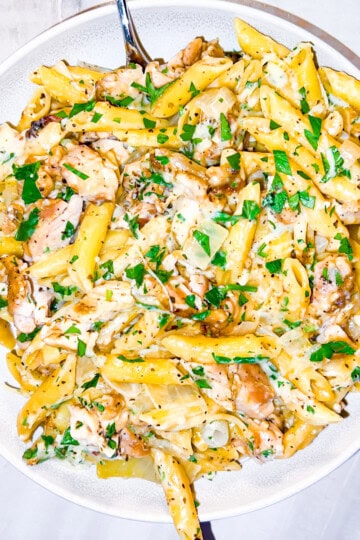
More Italian Recipes I Love
Did you make this recipe?
Let me know your thoughts by leaving a comment and rating below. Also, share it on socials to let others know what you think! Be sure to tag @entirelyemmy so I can share your masterpiece with my followers! ✨
📖 Recipe
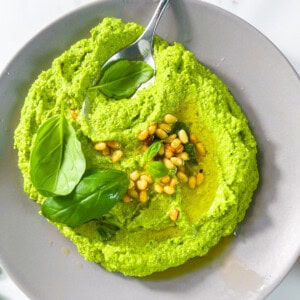
Ramp Pesto
Ingredients
- 2 Cups Wild Ramps roughly chopped
- 1 Cup Basil
- ¼ Cup Pine Nuts toasted
- ¾ Cup Pecorino Romano freshly grated
- ⅓ Cup Olive Oil
- 1 Lemon juiced & zested
- 1 Teaspoon Salt

Instructions
- Clean the ramps thoroughly, then pat them completely dry. Roughly chop both the bulbs and leaves, then divide into two 1-cup piles. Boil one pile for 10 seconds, then transfer to an ice bath briefly (a bowl with water and ice to shock them), drain, and squeeze out the excess water. This removes harsh allicin and keeps the ramps tender.
- In a dry skillet over medium heat, toast ¼ cup pine nuts for 3-4 minutes, stirring constantly. They're done when fragrant and lightly golden. Transfer them to a plate to cool. In a food processor, combine 1 cup blanched ramps, 1 cup raw ramps, 1 cup basil, ¼ cup toasted pine nuts, the juice and zest of 1 lemon, and 1 teaspoon salt. Pulse until roughly chopped, scraping down the sides as needed.
- Stop the food processor and add ¾ cup freshly grated Pecorino Romano. Start pulsing again while you slowly drizzle in ⅓ cup olive oil until it's completely combined. Use short pulses for chunkier pesto, longer pulses for a smoother consistency. Use the pesto immediately, refrigerate for up to 5 days, or freeze in ice cube trays for easy, year-round use.
Notes
- Pulse vs. Puree: How long you blend your pesto changes its texture completely. A quick 10-second pulse creates a rustic, chunky sauce where you can see and taste the ramps, nuts, and herbs, perfect for a bold, textured pesto. Blending for a full minute makes a smooth, silky, emulsified sauce that coats pasta evenly. For wild ramp pesto, I recommend pulsing until roughly chopped, then pulsing again as you add the olive oil. This keeps it creamy enough to spread or toss, but still with visible flecks of green for a fresh, rustic feel.
- The Microwave Hack: If your pesto tastes too sharp or gives a garlic burn, microwave it for 30 seconds. This gently deactivates any remaining allicin enzymes without cooking the sauce.
- Fixing Grassy Pesto: If your pesto tastes grassy, a pinch more salt or extra lemon zest will break down chlorophyll and brighten the flavor.

Jenna M says
Awesome recipe. I didn’t have pine nuts so I used cashews instead. Really love the wild garlic flavor! Thanks for sharing!
Cynthia says
Was supper yummy! Will make it again!!
Luc says
So tasty!!