

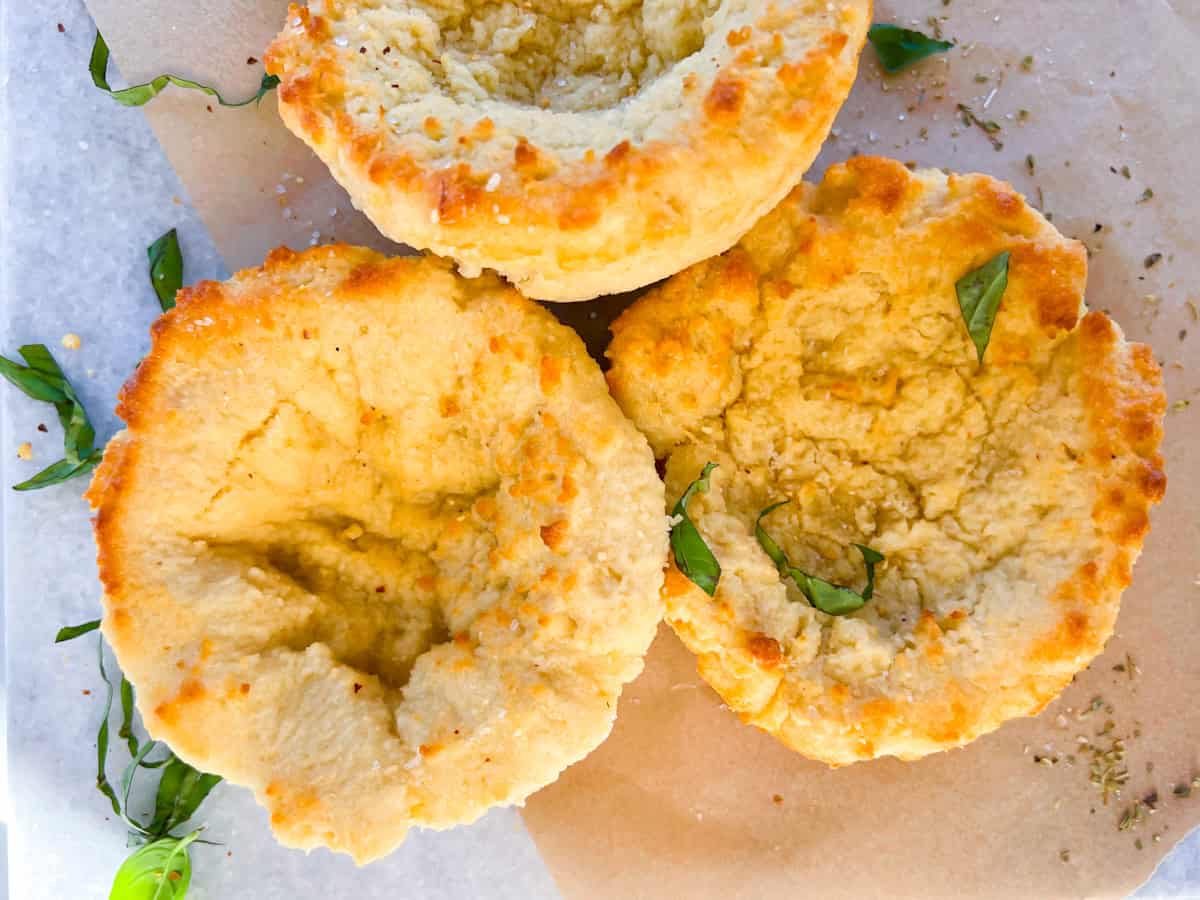
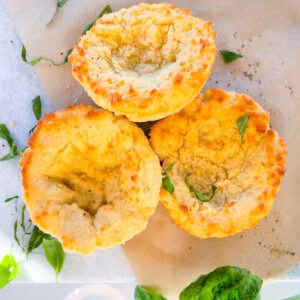
This gluten-free bread bowl is moist on the inside, with a golden savory crust, made using whole ingredients, & ready in just 35 minutes with no yeast or rising time required.
As a recipe developer, I've spent years perfecting gluten-free baking techniques, and this recipe uses almond flour, eggs, and Greek yogurt to create sturdy bowls that won't collapse under hearty soups, chili, or even baked eggs. The result is a biscuit-like texture with a golden, crisp exterior that holds up beautifully.
A Quick Look At The Recipe
- Total Time: 35 minutes
- Recipe Difficulty: Easy
- Cooking Method: Baked
- Main Ingredients: Almond flour, Greek yogurt, eggs
- Dietary Info: Gluten-free, low-carb, keto-friendly
- Serves: 4
- Calories: 409 per bowl
Summarize & Save This Content On
Featured Review
I just tried these with tomato soup & love the flavor. Thank you, Emmy!
- fran
These bread bowls have a golden, lightly crisp exterior and a soft, chewy interior. They contain 18 grams of protein per bowl, and use nutrient-dense ingredients to create a bakery-style texture in only 35 minutes.
If you want to try more gluten-free bread recipes, try my Buckwheat Bread Recipe or my Apple Pear Bread.
Why You'll Love This Recipe
- No Rise Needed: Skip the yeast & rising time.
- Sturdy Structure: The thick walls (approximately 0.75 inches) hold up against hot liquids without turning mushy.
- Versatile Use: Works for savory meals or breakfast-style bowls.
- Naturally Low-Carb: Just 19g net carbs per bowl, making them keto-friendly.
Key Ingredients
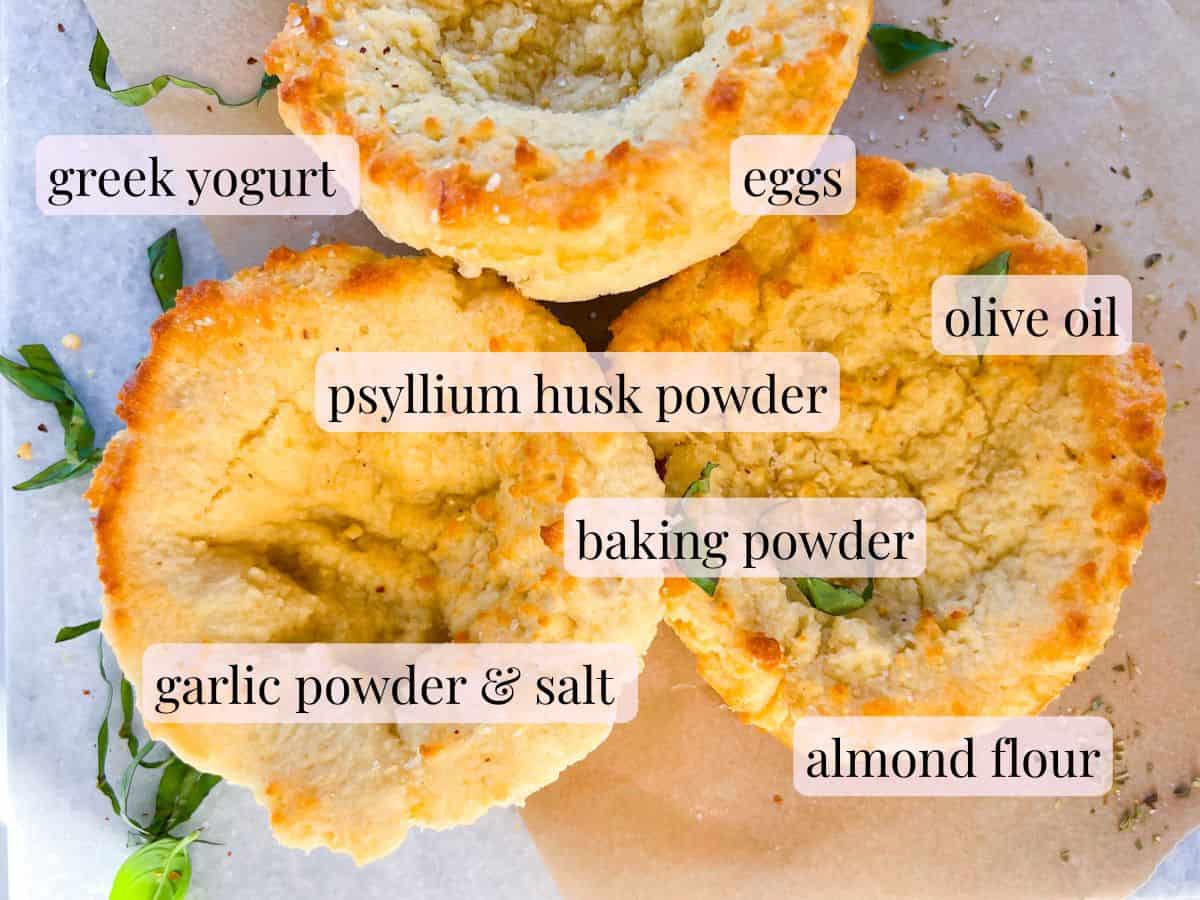
- Almond Flour: The structural base with a subtle nutty flavor. Use blanched almond flour (not almond meal) for a smooth, sturdy texture.
- Greek Yogurt: Adds moisture; full-fat yogurt provides the best flavor and texture.
- Eggs: Bring structure as their proteins set during baking, preventing the bowls from collapsing.
- Baking Powder: Creates lift without yeast; use fresh powder for proper rise.
- Psyllium Husk Powder: Acts as a binder.
- Olive Oil: Mix in the dough & brush on top for a crisp, golden exterior.
Substitutions & Variations
- Flour Substitutes: Swap with sunflower seed flour (nut-free), oat flour, gluten-free flour, or 25-30% cassava flour.
- Greek Yogurt: Swap with plain skyr or dairy-free yogurt.
- Eggs: Replace with flax eggs (2 tablespoon flax + 6 tablespoon water) for vegan versions.
- Toppings & Variations: Sprinkle with sesame seeds, hemp hearts, coarse salt, or everything bagel seasoning. Fold in the seeds for texture, add herbs + more garlic powder for a savory bread bowl, or cinnamon + raisins for a sweet breakfast version.
How To Make a Gluten-Free Bread Bowl

- Step 1: Preheat your oven to 375°F (190°C). Line 4 small ramekins (about 4-inch diameter) with aluminum foil and brush lightly with olive oil to prevent sticking. This ensures the dough releases cleanly and the exterior crisps evenly.
- Step 2: Whisk together Greek yogurt, eggs, and olive oil until smooth and fully emulsified. In a separate bowl, combine almond flour, baking powder, garlic powder, and salt. In a third small bowl, combine the psyllium husk with ¼ cup of water to create a gel. Mix the wet and dry ingredients, then add the psylium husk until a thick, moldable dough forms. The dough should be slightly sticky.
- Step 3: Divide the dough into 4 equal portions and press each firmly into the prepared ramekins, starting at the bottom and pushing up the sides to form walls approximately 0.75 inches thick, slightly thicker at the base to prevent leaks. Brush the tops with olive oil for a golden, crisp crust. Bake for 30 minutes, until lightly golden.
- Step 4: Let the bread bowls cool in the ramekins before carefully removing. They should feel sturdy and hold their shape. Serve immediately with soups or chili, or store unfilled in an airtight container for 4-5 days.
Expert Tips
- Maintain Wall Thickness: Keep walls at least 0.75 inches thick; the walls of the bread bowl will absorb liquid quickly due to the hygroscopic properties of almond flour.
- Finish with Olive Oil: Brushing the surface of the bread bowl dough with olive oil before baking gives the crispiest crust.
- Add Psyllium Husk: For extra strength, be sure to hydrate psyllium husk with ¼ cup of water separately before adding it, as it creates a natural binder for sturdier bowls.
- Prevent Soggy Bottoms: You can add a layer of shredded cheese in the base when serving very liquid soups.
Save This Recipe!
Pairing Ideas!
These bread bowls are perfect paired with my easy carrot and butternut squash soup or chicken piccata soup.
Gluten-Free Bread Bowls Frequently Asked Questions
Psyllium husk is best for structure. When hydrated, it forms a gel-like network that mimics gluten, creating a stronger, more flexible crumb that can support weight without cracking. Xanthan gum improves binding and softness, but doesn't build the same load-bearing structure. For sturdy, soup-ready bowls, psyllium delivers superior durability.
Collapse or sogginess usually happens when the walls are too thin (under 0.75 inches). Because almond flour has hygroscopic properties, it absorbs moisture quickly; maintaining the proper wall thickness is essential for structural integrity.

Did you make this recipe?
Let me know your thoughts by leaving a comment and rating below. Also, share it on socials to let others know what you think! Be sure to tag @entirelyemmy so I can share your masterpiece with my followers! ✨
📖 Recipe
Gluten-Free Bread Bowls
Ingredients
- 2 Cups Almond Flour
- ½ Cup Greek Yogurt full fat
- 1 Tablespoon Psyllium Husk Powder
- 2 Eggs
- 1 Tablespoon Olive Oil
- 1 Teaspoon Baking Powder
- 1 Teaspoon Salt
- 1 Tablespoon Garlic Powder

Instructions
- Preheat your oven to 375°F (190°C). Line 4 small ramekins (about 4-inch diameter) with aluminum foil and brush lightly with olive oil to prevent sticking. This ensures the dough releases cleanly and the exterior crisps evenly.
- Whisk together Greek yogurt, eggs, and olive oil until smooth and fully emulsified. In a separate bowl, combine almond flour, baking powder, garlic powder, and salt. In a third small bowl, combine the psyllium husk with ¼ cup of water to create a gel. Mix the wet and dry ingredients, then add the psylium husk until a thick, moldable dough forms. The dough should be slightly sticky.
- Divide the dough into 4 equal portions and press each firmly into the prepared ramekins, starting at the bottom and pushing up the sides to form walls approximately 0.75 inches thick, slightly thicker at the base to prevent leaks. Brush the tops with olive oil for a golden, crisp crust. Bake for 30 minutes, until lightly golden.
- Let the bread bowls cool in the ramekins before carefully removing. They should feel sturdy and hold their shape. Serve immediately with soups or chili, or store unfilled in an airtight container for 4-5 days.
Notes
- Maintain Wall Thickness: Keep walls at least 0.75 inches thick; the walls of the bread bowl will absorb liquid quickly due to the hygroscopic properties of almond flour.
- Finish with Olive Oil: Brushing the surface of the bread bowl dough with olive oil before baking gives the crispiest crust.
- Add Psyllium Husk: For extra strength, be sure to hydrate psyllium husk with ¼ cup of water separately before adding it, as it creates a natural binder for sturdier bowls.
- Prevent Soggy Bottoms: You can add a layer of shredded cheese in the base when serving very liquid soups.
Fran says
I just tried these with tomato soup & love the flavor. Thank you Emmy